
Reviewed · STREET ART
Rio Street Art Tour
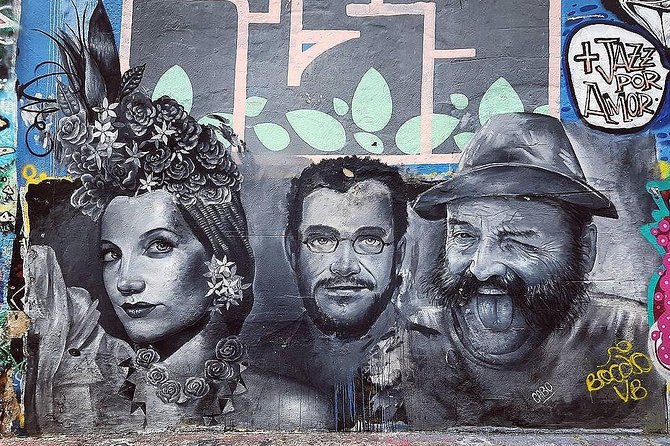
This Rio Street Art Tour is interesting because it connects murals with city history while you ride the subway and VLT between neighborhoods. It is not just a highlight stroll, it is a guided walk that helps you read what you are seeing.
I love how the guide frames graffiti as public art with meaning, from early legalized work in Rio to the political and cultural messages painted on walls. I also love that the route uses real local transport, so you get a sense of how Rio actually moves, not just where it poses for photos.
One thing to plan for: you will be on your feet and hopping between stops by public transit. If you hate walking or tight schedules, wear comfy shoes and give yourself a little buffer.
Key points at a glance
- Graffiti with context, including the stories behind major murals and what they represent
- Selarón Stairs (Escadaria Selarón), one of Rio’s most visited landmarks, explained beyond the colors
- VLT and subway riding, a practical way to travel between central neighborhoods
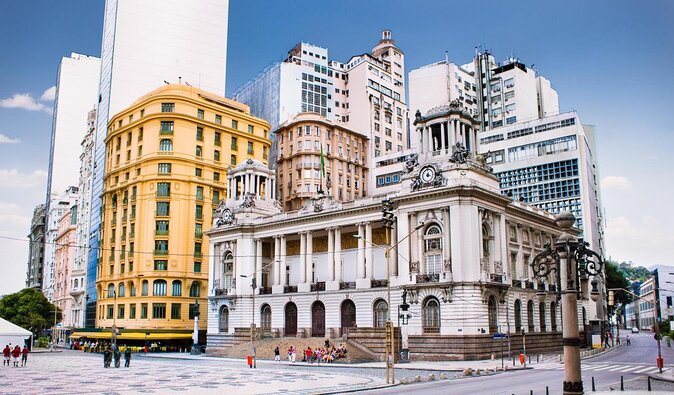
- Cinelandia and the theatre-and-library zone, seen through architecture and civic life
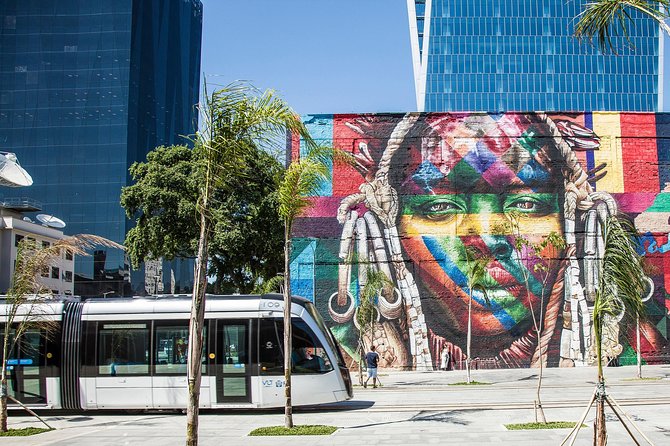
- Porto Maravilha and the big global-scale mural areas, including the Etnias mural
- Private tour with your group, led by Guia Wellington (Berimbautour), with great English and room for questions
Rio Street Art on the Move, Glória to Porto Maravilha
This tour works because it gives you a tool for seeing Rio. Instead of treating street art like random decoration, you learn how murals, architecture, and even place names reflect the city’s identity. You start in Centro, then you move into neighborhoods where the walls have become a kind of public newspaper.
You will also feel the rhythm of Rio. You are not trapped on a coach. You ride the subway, you use the VLT (Rio’s tram line), and you walk between the most art-relevant corners. That travel time matters, because it shows you the city’s layers close up, not just through windows.
The vibe is also personal. This is a private tour, only your group, guided by Guia Wellington (Berimbautour). In the past, he has even helped with small practical issues like transport tickets when rules get tricky. He is also reported to speak excellent English and he can even help you practice Portuguese while you are out there.
A few more Rio de Janeiro options
- Rio Street Art Tour
★ 5.0 · 76 reviews - São Paulo: Bar and Street Art Crawl with Local Guide
★ 4.9 · 102 reviews - Street Art and Park Bike Tour
★ 5.0 · 56 reviews
Meeting at the Municipal Theater and Getting Oriented Fast
Your tour meeting point is the Municipal Theater of Rio de Janeiro, at Praça Floriano in Centro. That is a smart start. The area around the theatre is central and easy to find, and it sets the tone: Rio street art is not separate from the big civic landmarks. It sits right beside them.
From the beginning, the tour is set up to get you oriented fast. You begin by heading toward Glória and then you build outward from there, using transit so you are not crisscrossing the city inefficiently. If you are on a first trip, this kind of route helps your brain map Rio quickly.
Practical tip: plan on being out for about 3 hours. The tour is not long by clock time, but you do cover multiple areas, and some stops are quick because the tour is designed around transit connections.
Glória and Boulevard Olimpico, where legalized graffiti meets architecture
One of the first stops is the Boulevard Olimpico area in Glória. Here, you get the story of what graffiti looks like when it is not treated as a crime but as a sanctioned form of public expression. You start by contemplating the first legalized graffiti in Rio, which is a key idea for understanding the rest of the tour.
Then you zoom out to the architecture. Rio is not only tropical color and beach energy. In this part of town, you see European architectural influence layered into the streetscape. That matters because it explains why murals in Rio often feel like conversations between eras, not just between artists and walls.
This stop also connects you to other famous landmarks along the way, including views associated with the Selarón Staircase. Expect the guide to point out details you would miss if you were just passing through.
What to watch for here:
- How the guide connects specific painted figures to social and political context
- How legalized graffiti changes the tone of the art, compared with works you might see in other cities
- How architecture sets a stage for murals to feel like part of the city, not an add-on
Selarón Staircase (Escadaria Selarón), more than a photo stop
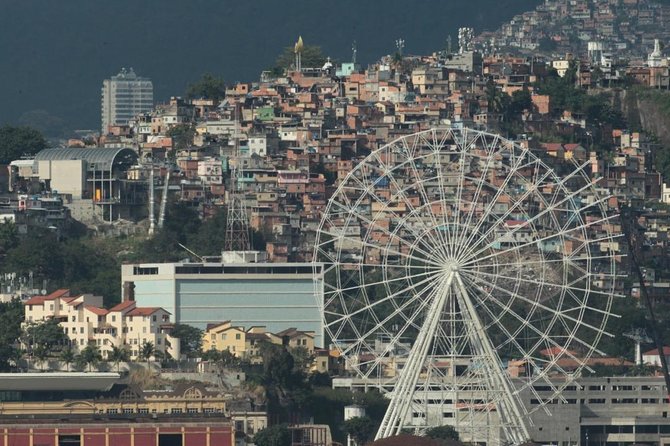
Next comes Escadaria Selarón, the Selarón Staircase. This is one of Rio’s top tourist hits for a reason: it is intense, colorful, and very human. It also helps that the staircase is visually easy to locate, so you can focus on what the guide is teaching you rather than hunting.
But the value here is what you do once you are standing on it. You do not just look. You learn how to read the stairs as a statement and a tribute, and you hear how the surrounding area and the art’s themes fit into the wider Rio story.
Because this stop is designed as a guided experience, you get a clearer sense of meaning while the setting stays fun and lively. In past tours, the guidance has covered how murals link to Brazilian history and culture, and how the art reflects broader debates in the city.
Time at this stop is about 20 minutes, which is enough for photos and learning without turning it into a slow slog.
Tip: bring water. It can get hot fast in Rio, and you will keep moving between stops.
More days in Rio:
- Rio de Janeiro: 6-Stop Highlights of Rio with Lunch
★ 4.4 · 5,157 reviews - Christ the Redeemer Entry Ticket by Corcovado Train
★ 4.4 · 4,476 reviews - Rio’s City Tour – Tickets for Christ, Sugar Loaf & Lunch included
★ 5.0 · 4,389 reviews - Full Day: Christ Redeemer, Sugarloaf, City Tour & Barbecue Lunch
★ 4.5 · 3,142 reviews
Cinelandia’s libraries and theatre, why the center matters
From there, the tour takes you toward Cinelândia, where you see the civic heart of central Rio. Cinelândia is where the big public buildings gather, including major libraries and a major theatre.
Even if you are not a museum person, this part makes sense in the context of a street art tour. Street art in Rio does not live in a vacuum. It reflects the same public life that shows up in theatres, libraries, and civic architecture. When your guide ties the murals back to place, suddenly the city feels like one connected story.
This segment lasts around 30 minutes. It is long enough to take in the architectural scale, but short enough that you are still progressing through the route instead of getting stuck on any single corner.
After Cinelândia, you use the VLT again to connect toward the next zone near the Olympic Boulevard. That rhythm helps you keep the pace without feeling rushed.
Olympic Boulevard and the museum zone near Boulevard Olimpico
You then reach the Olympic Boulevard area, which the tour uses as a gateway to Rio’s museum cluster. This is one of those moments where you feel the tour’s bigger point: street art is part of the same creative ecosystem as museums and institutions, even when it feels very informal.
The tour describes this section as home to the city’s main museums. Your time here is about 30 minutes, so it is not about museum ticket lines and deep gallery hours. It is about getting oriented to the area and hearing how the guide connects art outside to art inside.
If you like to travel with a theme, this is where your theme expands. You are not only chasing murals. You are learning how Rio organizes culture across different spaces.
Porto Maravilha finish, the scale of the Etnias mural moment
The tour wraps up in Porto Maravilha, where you get the payoff for street art scale. The route is built to get you near the largest graffiti mural in the world, including the Etnias mural area (the tour calls it the etinia panel). This is the kind of mural that changes your sense of what street art can be, because it is huge and executed with an almost public-monument ambition.
Finish time is about 1 hour. That extra time matters here, because you need a little room to look slowly. When a mural is this large, speed kills the experience. You want to step back, then step forward, and watch the imagery land.
Porto Maravilha is also a nice ending point because it feels like a zone where Rio is actively remaking itself. If you are the kind of traveler who likes to see where cities are headed, this helps you end with a sense of contemporary Rio, not only the older downtown layers.
Transport, walking, and what to bring for 3 hours in Rio
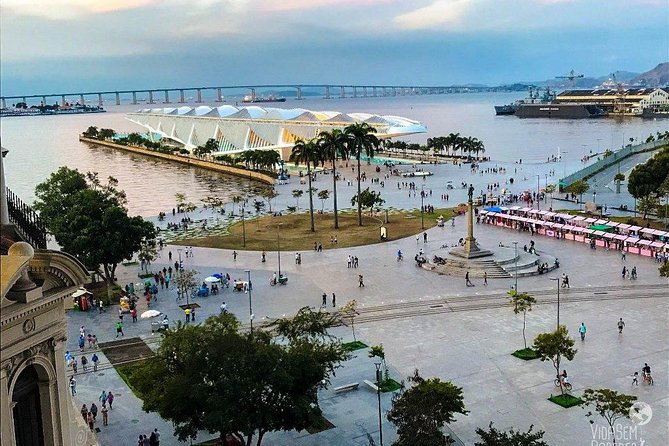
This tour is designed as a mix of walking and public transit. You start at a central landmark, head toward Glória, then keep moving by subway and VLT to link neighborhoods. That is part of the value, because it keeps the itinerary efficient and gives you a taste of daily city movement.
What I recommend you bring:
- Comfortable walking shoes (you will be on your feet)
- A water bottle
- A little patience for city transit timing, especially if service is busy
- A camera, because multiple stops are built for photos, not just quick viewing
Also keep in mind that the tour requires good weather. If conditions are poor, the experience can be moved to another date or you can get a full refund.
Price and value, what $68.61 gets you in real terms
At $68.61 per person for about 3 hours, this is not a “cheap and cheerful” tour, but it also is not overpriced for what you get.
Here is the value breakdown in plain terms:
- You are paying for a guided route that connects many locations in a short window, including the Selarón Staircase, Cinelândia civic buildings, and the huge mural areas in Porto Maravilha.
- You are paying for interpretation. The guide is not just pointing. He ties murals to broader context, including cultural and political messages.
- You get a practical transit experience using subway and VLT, which can save you time and confusion if you are not familiar with Rio’s layout.
One more value point: you are not sharing the experience with strangers. It is a private tour, only your group, which often makes questions easier and the pace more comfortable.
A possible drawback to consider for value: if you expect only brand-new graffiti, you might notice that some works discussed may feel older. The flip side is that older murals often have stronger stories, and this tour aims at meaning over novelty.
Who should book this Rio street art tour
This is a good fit if you:
- Want street art with history and context, not just a mural checklist
- Like to see Rio through neighborhoods, architecture, and public spaces
- Prefer public transit over sitting on a coach for hours
- Travel with a group that wants a private guide rather than a crowded tour
It is also great for solo travelers because the guide’s explanations and English support have been a strong part of the experience in the past.
Families can do it too, especially if everyone is comfortable with moderate walking and transit. The tour is designed for most travelers to participate.
If you are short on time and you want one outing that helps you understand Rio’s street art as part of the city, this works well.
Should you book Rio Street Art with Guia Wellington?
Yes, if your goal is to understand Rio through the city’s walls, civic spaces, and transport. The route hits major landmarks like Escadaria Selarón and the big mural areas in Porto Maravilha, and it does it in a way that teaches you how to read what you see.
Book it especially if you care about why murals exist, not only what they look like. If you are sensitive to walking and you dislike using public transit, plan your footwear and energy carefully.
If the weather is poor, do not stress. The tour can be offered another date or you can get a full refund.
FAQ
How long is the Rio Street Art Tour?
It runs for about 3 hours.
What does the tour cost?
The price is $68.61 per person.
Is this tour private or shared?
It is private. Only your group participates.
Where do we meet?
The meeting point is the Municipal Theater of Rio de Janeiro, Praça Floriano, S/N – Centro, Rio de Janeiro – RJ, 20031-050, Brazil.
Where does the tour end?
The activity ends in a different location, with end details shown at booking.
Are admission tickets needed for the stops?
The tour includes admission tickets that are listed as free at the stops mentioned.
What transportation will we use during the tour?
The tour includes subway travel and the VLT (public tram) between areas, plus walking.
Do I need good weather for the tour to run?
Yes. The experience requires good weather. If it is canceled due to poor weather, you are offered a different date or a full refund.
Can I get a refund if I cancel?
Yes. There is free cancellation, and you can cancel up to 24 hours in advance for a full refund. If you cancel less than 24 hours before the start time, the amount paid is not refunded.
Newest Rio de Janeiro reviews
- Maracanã Matchday Tour – Ticket + Guide + Transfer★ 5.0 · 14 reviews
- Private Tour with Churrasco in Vela Catamaran – Velas do Rio★ 5.0 · 14 reviews
- Angra & Ilha Grande From Rio: Boat Tour With Barbecue and Drinks★ 5.0 · 14 reviews
- Tijuca Forest Adventure★ 4.5 · 14 reviews
- Half-Day Private Tour:Rio de Janeiro Highlights by Bernard Moraes★ 5.0 · 14 reviews
- Rio de Janeiro: Join a Fluminense game at Maracanã with locals★ 5.0 · 15 reviews
- Rio de Janeiro: Join a Botafogo soccer game with transport★ 5.0 · 15 reviews
- Christ the Redeemer, Selaron Steps and Santa Teresa Half-day Tour★ 4.5 · 15 reviews
Street Art, compared.
Private Street Art Tour of São Paulo with Batman´s Alley Visit
Read our review →
5-hour Private Street Art Tour Of São Paulo – The Coolest Urban Art Scenes
Read our review →
Browse the lists this tour appears in