
Reviewed · SãO PAULO HIGHLIGHTS
7-hour Private Tour Overview Of São Paulo – Optional For GRU Airport Pickup
São Paulo can feel huge and confusing fast, so what I like about this private day is that it gives you a smart route across the city without forcing you into a group schedule. You get to choose how you want the day to lean, and the guide handles the city flow and the explanations.
I especially love the mix of big sights and neighborhood texture. Ibirapuera Park is a strong anchor with lake views and top art museums nearby, and Batman Alley delivers the kind of street art you do not get from a checklist photo.
The main thing to consider is time and traffic. A 7-hour day in São Paulo is enough to see a lot, but your exact pace depends on where you start, and the route can be slowed on heavy traffic days.
Key highlights to look for
- Ibirapuera Park: lake, fountains, and major art stops in one area
- MAC USP 360-degree views: a high vantage point over the city
- Liberdade weekend culture: Japanese neighborhood vibe and a craft and culture fair
- Central São Paulo core: Sé Cathedral and the Jesuit-era founding story
- Market and Paulista: Mercado Municipal for local food atmosphere, then a Paulista walk
- Batman Alley and Vila Madalena: the street-art heart of São Paulo
A Custom Private Day That Lets You Read the City
This is the kind of tour that works because it treats São Paulo like a city of layers, not a single museum route. You will travel with a licensed private guide in a fully equipped vehicle, and you get the freedom to steer the day toward what you care about most, whether that is architecture, art, neighborhoods, or simply how people actually live.
The day is designed to hit major “I get it now” moments, then push into the places that explain the city’s personality. You start with skyline postcard views, work your way through parks and culture zones, then end in an artistic pocket where murals and walls take over.
In the reviews, guides like Danilo, Carlos, Monica, Nelio, Ilan, Bruno, Joice, Enrico, Laura, Gabriel, and Mauro come up again and again, and the common thread is energy plus clear English explanations. That matters, because São Paulo is not obvious if you do not have context.
More of São Paulo:
- Skydive Tandem – São Paulo – Brazil
★ 5.0 · 1,840 reviews - São Paulo’s Full Day City Tour: Main City Sights in 7 Hours – (Shared Group)
★ 5.0 · 1,691 reviews - 5-hour Private Tour Of São Paulo With Its Main Sights – Optional Airport Pickup
★ 5.0 · 643 reviews
Price and Value: Why $233 Per Person Can Make Sense

At $233 per person for about 7 hours, this is not a budget choice. But you are buying convenience and access, not just transportation. You get a private guide and private vehicle with parking and city handling included, which can be the difference between seeing a handful of stops and actually connecting the dots across neighborhoods.
Also, the route includes many free admission stops. In other words, you are not paying museum entry costs every few blocks. And since the tour is not aimed at forcing you into paid attractions, it helps keep the day affordable on the ground.
If you are traveling as a couple or a small group, private touring in São Paulo can also be a smart move. One shared taxi can turn into a stress-fest when you need constant stops and quick explanations. A guide who can adjust the sequence makes the time feel better used.
Timing, Traffic, and How the Day Actually Flows
São Paulo traffic is real. Even with a good plan, the day can flex. What I like here is that the tour is built for pacing, not rushing. You get set time blocks at key stops, enough to look around, take photos, and listen.
Your guide also matters because they can manage movement on busy streets. In multiple experiences, guides adjusted the order to help you avoid crowd build-ups and time drains. One review even mentioned avoiding busier traffic areas and tweaking the day so eating and transit felt smoother.
One more practical perk: airport pickup is part of the offering for GRU in the greater São Paulo area. If your itinerary includes a quick arrival or layover, you do not have to waste time figuring out transport.
The Postcard Bridge and Ibirapuera Park, Where São Paulo Shows Its Big-City Face
The tour starts with a dramatic city view: São Paulo’s famous X-format suspended bridge, a 138-meter structure that is often described as world-unique because the bridge has two lanes in independent curves. It is a quick stop, but it sets the tone. You get a sense of scale right away, and it is a clean way to begin if you want orientation without standing in traffic for hours.
Then you move into Parque Ibirapuera, one of the city’s most important green spaces. The park is known for its lake views and fountains, and it also houses top art museums nearby, including MAC, MAM, and an Afro-Brazil museum. Even if you do not go deep into every building, the area itself helps you understand why São Paulo invests in culture as part of public life.
What makes Ibirapuera work on a first visit is that it is both pretty and meaningful. You can walk, reset, and listen as your guide explains how the park fits the city’s modern story.
More days in São Paulo:
- São Paulo: Main City Sights in 7 Hours – Shared Group Tour
★ 4.9 · 587 reviews - 6-Hour Classic Half-Day Private Tour of São Paulo – Optional Airport Pickup
★ 5.0 · 441 reviews - São Paulo: City Highlights Guided Tour
★ 4.5 · 307 reviews - Amazing São Paulo overview in 4 or 5 hours with a private guide
★ 5.0 · 290 reviews
A quick note on museums
Many stops are listed as free admission time blocks, but the tour is not built around paid entry. If you choose to go inside a ticketed museum later, you should expect to pay separately. This setup still gives you the value of the sights without forcing museum spending.
MAC USP 360 Views, the Bandeiras Monument, and Why These Details Matter
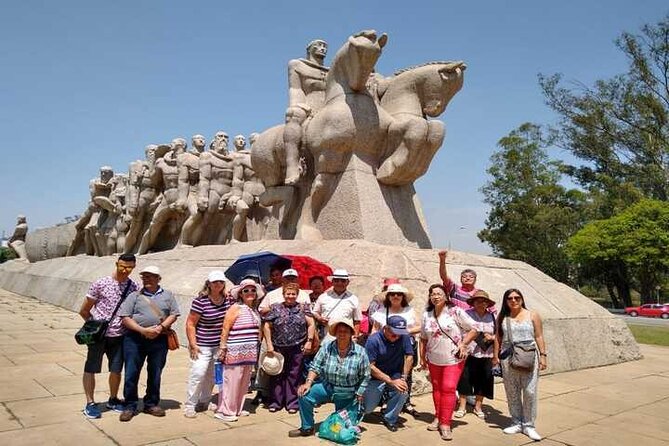
From Ibirapuera, the route goes to the Monument to the Bandeiras, a must-see postal-card type structure honoring early settlers. It is short in time, but it is one of those landmarks you will recognize again later if you keep exploring the city on your own.
Next comes a highlight that is all about perspective: Museum of Contemporary Art, MAC USP Ibirapuera. The big draw is the 360-degree view over a large part of São Paulo. This is where the day stops being a series of photos and becomes a real mental map.
A 360 view helps you understand how far neighborhoods stretch and how different zones feel connected. For first-timers, that matters. You stop thinking of São Paulo as one big city and start thinking of it as a system of districts with their own rhythms.
Vertical Garden to Liberdade: Neighborhood Life You Can Feel
After the park zone, you will see a world’s largest vertical garden along a building’s walls. It is not just a photo op. It is a reminder that São Paulo is constantly reshaping itself, trying to bring nature and design into dense urban areas.
Then the tour heads to Liberdade, the Japanese neighborhood known for street character and weekend energy. If your schedule matches, you can catch a craft, art, and culture fair that brings the neighborhood to life. The lighting poles and Japanese-style lamps also help define the area and make it feel distinct from the surrounding city blocks.
This part of the day is valuable because it breaks the “center only” pattern. You see how immigration and cultural identity shape real daily life, not just history text.
Sé Cathedral, the Monastery Story, and the Center Where the City Took Shape
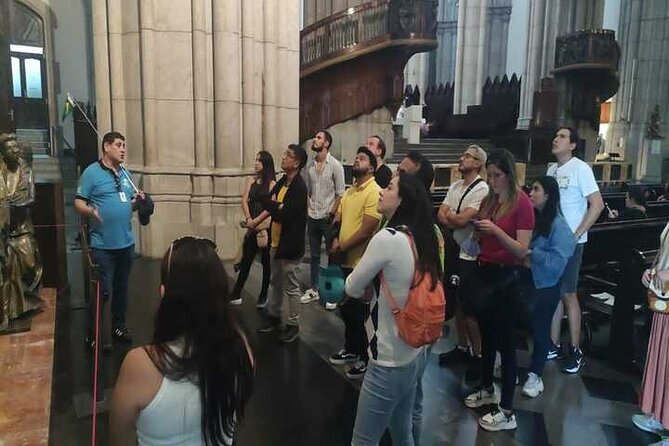
The heart of the city tour is centered on historic significance. First is Catedral da Sé de São Paulo, inspired by medieval European churches. The building is imposing, and it marks the city’s center at Sé Square, a very busy area. Even if you only spend about 15 minutes here, you will feel how this spot functions as a city landmark and gathering point.
Next, you visit the San Benedictine Monastery. What I find practical about this stop is that it is interesting even if you are not religious. One review noted that Pope Benedict XVI visited the building, and the monastery offers breads, cakes, cookies, and jams made by monks, with recipes that are described as secular. That gives the stop a local, human angle.
From there, you go to the historic founding site and museum area, where Jesuits built the first school with the intention to teach and catechize native peoples. Even when you keep it brief, this kind of stop adds backbone to the city story. It helps you understand why São Paulo developed the way it did, especially as a major Southern Hemisphere metropolis.
Then you shift into the industrial and civic power story with the Matarazzo Industries building. It was inaugurated in 1939 and is described as one of the largest industrial conglomerates in Brazilian history. The architect is linked to Marcello Piacentini, noted as the favorite architect of Benito Mussolini. Today, the building functions as the headquarters of city administration.
Municipal Theater, Julio Prestes, and the Cultural Spine
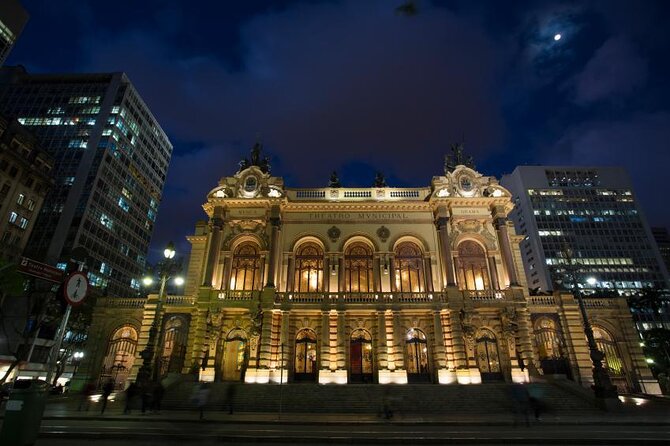
From the industrial-civic block, the day moves to culture through architecture. The Municipal Theater is treated as a postcard stop and a key historical site, including the Week of Modern Art of 1922, one of the major cultural events connected to the theater.
Then you head to Julio Prestes Station, a historical building that is also a train station. It also functions as a concert house for the São Paulo Symphonic Orchestra. That combination is clever. You get history, transport heritage, and modern cultural use all in one.
This section is a good reminder of how São Paulo stacks roles into buildings. The city did not stop at infrastructure, and it did not stop at art, either. It mixes both.
Estação da Luz and Mercado Municipal, Two Sides of Migration and Food
A key stop is Estação da Luz. It plays a big role in Brazil’s history and became a gateway for immigrants arriving via train from Santos port. The mass waves of immigration are described as a factor that helped transform a small town into an important metropolis across the 20th century.
From a history viewpoint, Luz gives you the why behind São Paulo’s cosmopolitan feel. And from a practical viewpoint, it grounds the day right before you hit the most sensory part.
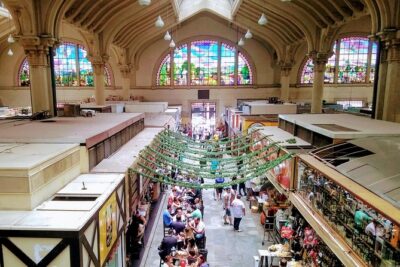
Then you go to the Mercado Municipal de São Paulo, a “must-see” type of stop. You will see fruit, nuts, wines, cheeses, and beers, plus a lot of food atmosphere. Even if you do not eat a big meal there, it is a place where local commerce and food culture are on full display.
For many people, this is where São Paulo turns from “sights” into “experiences.” The smells, counters, and people watching make the city feel real.
Paulista Avenue, Jardins, and the Shopping Streets You Should Know About
You end up on Paulista Avenue, walking through one of the city’s most famous corridors. It looks impressive, but what makes it worth guiding time is context. With an expert guide, Paulista becomes a storyline instead of just a long street with buildings.
After that, you go into Jardins, described as elegant and significant, with leisure, culture, fancy shopping areas, restaurants, and hotel chains. This is where you can feel the wealth and design preferences shaping the city’s modern identity.
The route also mentions a shopping street: 25 de Março Street. It is known for good prices and draws about 400,000 people daily, with 5,000 registered stores selling everything from tchotchkes to sewing supplies. That is a huge contrast to Jardins, and that contrast is the point. São Paulo shopping is not one lane. It is two worlds in the same city.
Churches and Imported Cars, Then Jardim Europa for the Upscale View
One stop that stands out for design is Paroquia Nossa Senhora do Brasil, described like a Sistine Chapel style interior with lots of ceiling paintings. The inspiration is linked to Brazilian and Portuguese baroque temples, and the style is described as neo-colonial, popular in São Paulo architecture from the 1920s and 1930s.
Another practical curiosity stop is Europa Avenue, where you can see imported car dealerships like Ferrari, Lamborghini, Maserati, and Bentley. If you like cars, this is a fun “just because” stop that still feels local to the city’s consumer culture.
Then you move into Jardim Europa, described as surrounded by luxurious mansions of bankers, politicians, industrialists, entrepreneurs, and football players. It is not a “do” stop so much as a view-and-feel stop. You learn how São Paulo’s neighborhoods rank and how prestige takes physical form.
Batman Alley and Vila Madalena: Street Art You Can Walk Through
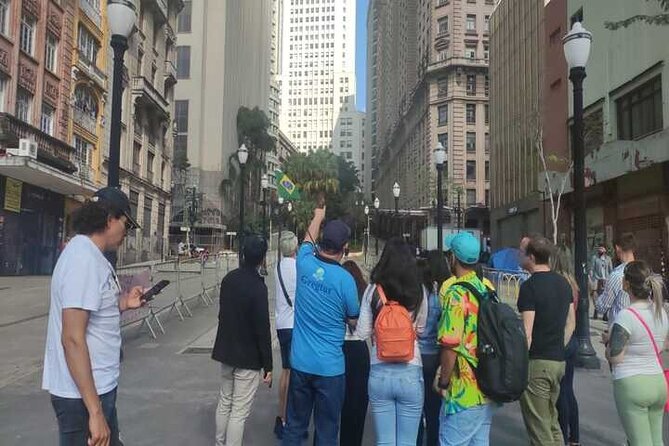
The closing stretch is where the city’s creative side takes over. Batman Alley in Vila Madalena is known for street art covering nearly every surface on a long wall-lined street. The murals are spray paint and they change over time, which means you do not walk into a museum with fixed exhibits. You walk into something alive.
This is often a favorite moment in the reviews because it feels like São Paulo’s art culture at street level, not gallery level. You also get time to explore Vila Madalena more broadly, which is described as evolving into a cultural hub with artists, small private art galleries, and studios.
If you want a souvenir that is not a shop bag, this is it. You leave with images and ideas you will keep talking about.
Should You Book This 7-Hour Private São Paulo Tour?
Book it if you want a first-time São Paulo orientation with a guide who can explain what you are seeing, and you care about more than just the headline attractions. The private format is especially helpful for short visits and layovers, and the GRU pickup angle is a real convenience.
Skip it, or consider another format, if you already have a clear plan and you prefer self-guided browsing with no fixed route. This tour has many stops, and even with free admission blocks, it is still a structured day.
FAQ
Is this tour private?
Yes. It is a private tour, meaning only your group participates.
How long is the tour?
It is listed as about 7 hours.
How much does it cost?
The price is $233.00 per person.
What is included in the price?
You get transport in a fully-equipped vehicle, a professional licensed private guide, and parking fees during stops. It also includes VAT and taxes, airport greet and meet service, and hotel or airport pickup and drop-off within São Paulo and its greater area limits.
Are entrance fees included?
Entrance fees are not included. The tour is also not aimed at going into museums and sights that charge admission fees.
Does the tour include food and drinks?
No. Food and drinks are not included.
Is GRU airport pickup available?
Yes. Airport greet and meet service is included, and hotels and airport pickup and drop-off are included within the greater São Paulo limits.
What is the cancellation cutoff?
You can cancel up to 24 hours in advance for a full refund. If you cancel less than 24 hours before the start time, the amount paid is not refunded.
Newest São Paulo reviews
- Private Tour: Santos & Guarujá Beaches (8H) – São Paulo Pickup★ 4.5 · 15 reviews
- Body Massage – by Venus’ Secret Spa – Sao Paulo★ 5.0 · 15 reviews
- Private Arrival Transfer: Guarulhos International Airport★ 4.5 · 15 reviews
- Taxi from Guarulhos airport to São Paulo capital★ 5.0 · 15 reviews
- Historical and Cultural Tour of the Center DE São Paulo★ 5.0 · 16 reviews
- São Paulo Coffee Tour: Farm, Culture & Lunch Included – 6h★ 4.5 · 16 reviews
- Private Half-Day Tour of São Paulo Highlights★ 5.0 · 17 reviews
- Private Transfer São Paulo Airport to Hotels with Quick City Tour★ 5.0 · 17 reviews
São Paulo Highlights, compared.

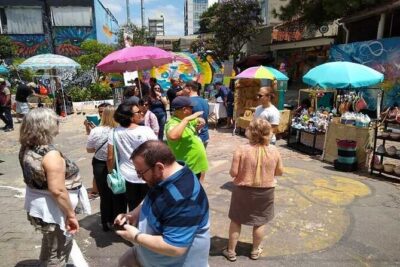
São Paulo’s Full Day City Tour: Main City Sights in 7 Hours – (Shared Group)
Read our review →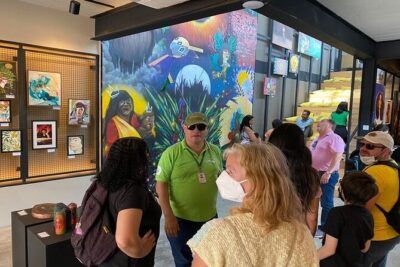
5-hour Private Tour Of São Paulo With Its Main Sights – Optional Airport Pickup
Read our review →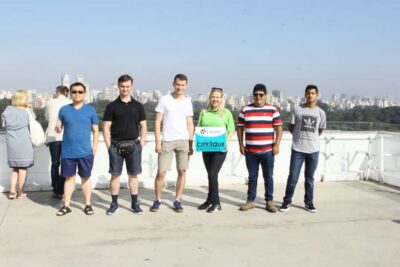
Main City Sights in 7 Hours – Shared Group Tour
Read our review →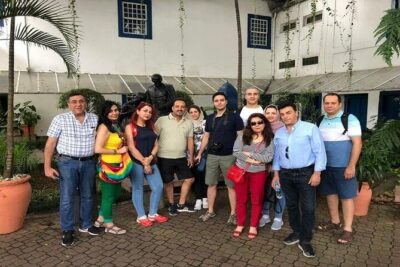
6-Hour Classic Half-Day Private Tour of São Paulo – Optional Airport Pickup
Read our review →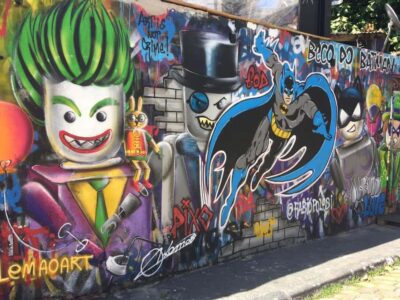
Amazing São Paulo overview in 4 or 5 hours with a private guide
Read our review →
Browse the lists this tour appears in